On March 11, 2011, at 2:46 p.m. Japan Standard Time (05:46 UTC), a magnitude 9.0 earthquake ruptured the seabed off Japan’s Tōhoku region. The displacement triggered a powerful tsunami that devastated Pacific coastal communities and initiated the nuclear emergency at Fukushima Daiichi. According to the Japan Meteorological Agency (JMA), this was the largest instrumentally recorded earthquake in Japan.
The first minutes of March 11
The earthquake occurred offshore from the Oshika Peninsula, at a depth of around 24 kilometres. Maximum Japanese seismic intensity shindo 7 was observed in Kurihara, Miyagi Prefecture. Shaking lasted several minutes and affected much of eastern Japan. Tsunami warnings followed, but some communities had very little time to reach higher ground.
Why was the tsunami so destructive?
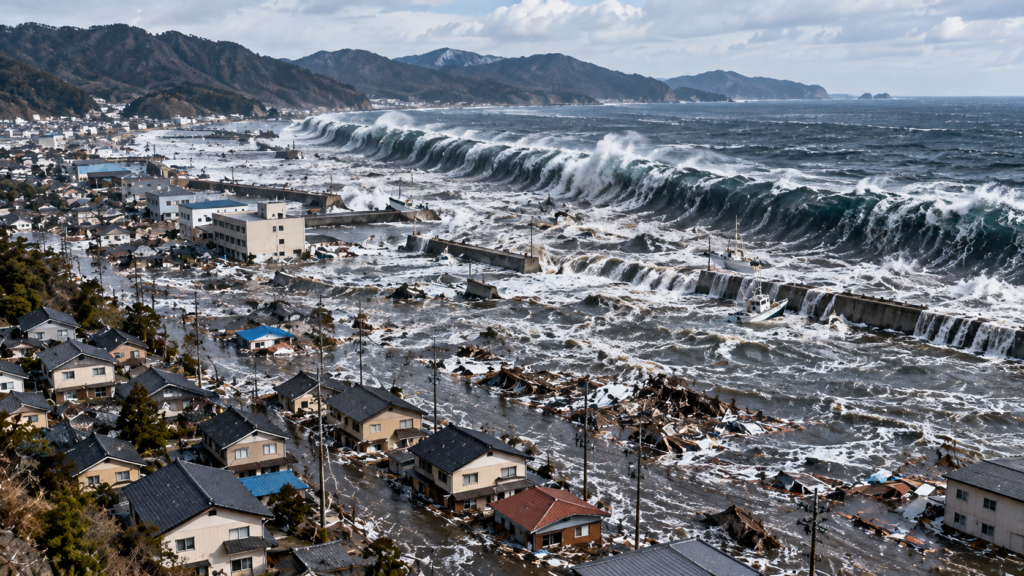
The rupture occurred along the subduction zone where the Pacific Plate descends beneath northeastern Japan. A vast section of the fault slipped, lifting and shifting the seafloor and displacing the water above it. Waves intensified as they entered shallower coastal waters and bays, rushing inland. A tsunami is not necessarily a single wave; multiple dangerous surges can arrive.
Wave height versus tsunami run-up
JMA recorded tsunami levels of several metres at multiple coastal stations. Field studies measured run-up heights above 30 metres in some parts of Iwate, with other surveys documenting still higher local traces. Run-up indicates how high water reached above the local reference level at a particular location: it does not mean the entire coastline faced one uniform wave that high.
Human losses across Iwate, Miyagi and Fukushima
The tsunami flooded towns, destroyed homes and ports, damaged hospitals, roads and railway lines, and swept debris inland. A historical casualty summary published by Japan’s Reconstruction Agency reports 19,729 deceased and 2,559 missing, reflecting the agency’s specified administrative reporting period. Later counts by other authorities may differ. Over 470,000 people were evacuated during the disaster’s aftermath. Much of the coastal destruction resulted from inundation rather than shaking alone.
Fukushima Daiichi: a technological disaster following a tsunami
The earthquake disrupted external power to the Fukushima Daiichi nuclear power station. Flooding from the tsunami disabled important emergency power and cooling systems, contributing to severe reactor accidents and prolonged evacuation. The earthquake and tsunami disaster and the nuclear accident are linked but remain distinct physical and technological events.
What changed in Japan after 2011?
Japan expanded reconstruction efforts, updated inundation maps and evacuation planning, improved warning systems and revisited assumptions about extreme tsunami hazards. A crucial lesson remains: anyone experiencing strong or prolonged coastal shaking should immediately move to higher ground or an officially designated safe location without waiting for a formal warning.
A disaster felt across the Pacific
The tsunami crossed the Pacific Ocean and was observed in numerous countries. The event reinforced the need for international exchange of seismic and sea-level observations and coordinated warnings. For background, read EarthSentra’s guide to how tsunamis form.
Frequently asked questions
How powerful was the 2011 Japan earthquake?
JMA records a moment magnitude of 9.0.
When did the tsunami begin?
The triggering earthquake struck at 2:46 p.m. JST on March 11, 2011 (05:46 UTC); tsunami arrival times varied along the coast.
Were all tsunami waves 30 or 40 metres tall?
No. Extreme run-up figures describe particular locations and landforms, not a single constant wave height across the entire shoreline.
Official references
- Japan Meteorological Agency: 2011 Great East Japan Earthquake
- Reconstruction Agency: historical casualty and evacuation summary
- Earthquake Research Committee: earthquake and tsunami assessments
- JMA: 2011 earthquake and tsunami portal
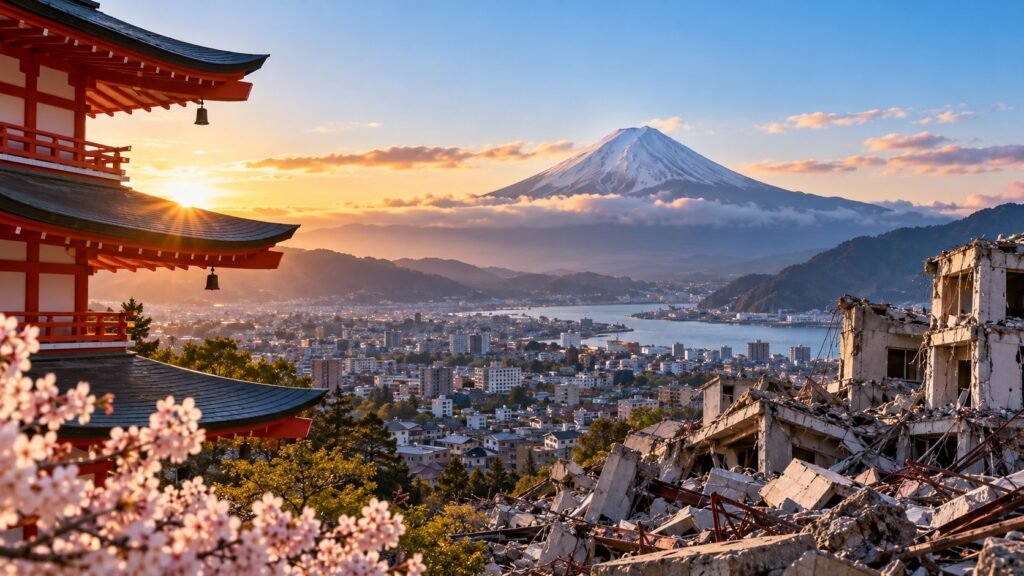
Historical feature reviewed October 24, 2026. Featured artwork is a conceptual artistic reconstruction, not a documentary photograph of the March 11 disaster.