
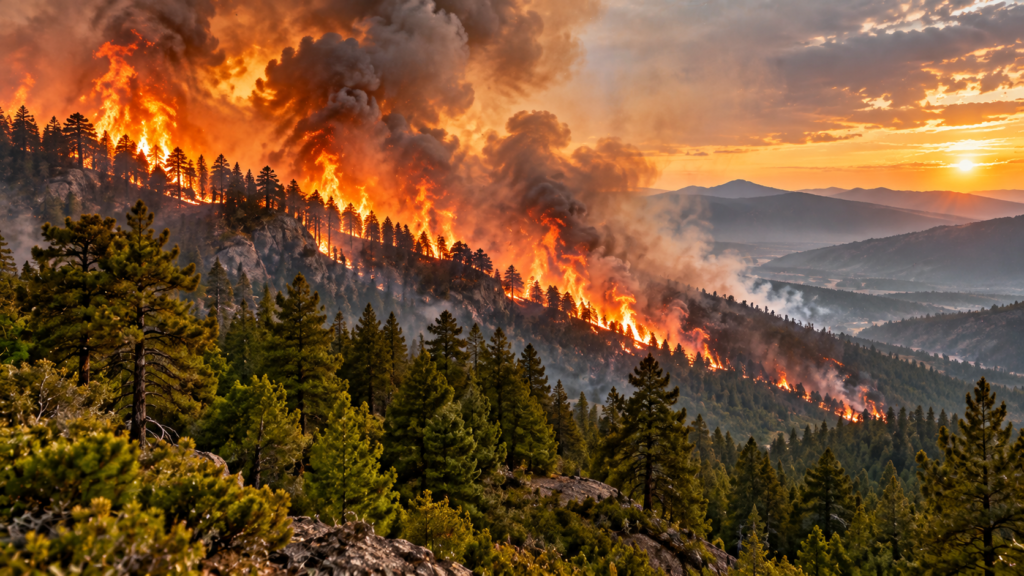
A wildfire is an uncontrolled or unplanned fire burning in wildland vegetation such as forests, grasslands and shrublands. Fires can begin through lightning or human activities, and their spread depends on fuels, weather and terrain. In the United States, wildfire risk differs widely by landscape and season; a dry or windy day does not mean a fire is certain to start.
What causes a wildfire?
Fire requires heat, oxygen and fuel. Lightning is one important natural ignition source. Human causes include escaped debris burns, equipment sparks, unattended campfires, electrical equipment and intentional ignition. The share of fires attributed to different sources varies by place and period. It is misleading to say that climate change itself lights all wildfires, although changing conditions can affect their behavior.
How do wildfires spread?
The U.S. National Park Service describes a fire-behavior triangle of fuel, weather and topography. Dry grasses and leaves ignite more readily than damp material. Wind can push flames and carry embers ahead of the front, creating new spot fires. Fire often moves faster uphill because rising heat preheats the fuels above it. Each wildfire behaves differently as these variables change.
Three main wildfire types
| Type | Where it burns | Main concern |
|---|---|---|
| Surface fire | Grasses, leaves, shrubs and litter near the ground | Fast spread through dry surface fuels |
| Crown fire | Tree crowns and forest canopy | High intensity and difficult suppression |
| Ground fire | Peat, roots and organic layers below the surface | Slow-burning persistence and possible reignition |
A single wildfire may transition among these behaviors. These classifications describe the burning fuel layer, not the initial cause.
What are the effects of wildfires?
Wildfires can damage homes, infrastructure, livelihoods, wildlife habitat and ecosystems. Smoke and fine particulate pollution may affect communities far from the fire. After severe burning, bare ground may become more susceptible to erosion and runoff during heavy rainfall. Yet fire also has a natural ecological role in certain forests and grasslands. The consequences depend on intensity, timing, frequency and ecological context.
How do drought and climate change affect wildfire risk?
Dry conditions reduce moisture in vegetation, making ignition and rapid spread more likely when a spark occurs. EarthSentra’s guide to drought explains these water deficits, while desertification concerns longer-term dryland degradation. Climate change can lengthen or worsen fire-weather conditions in some regions, but land management, ignitions and vegetation remain crucial factors. The weather influence of El Niño also varies by location; individual fires should not automatically be attributed to it.
Wildfire safety and prevention
- Observe local burn bans and fire restrictions in parks and public lands.
- Never leave campfires or other sources of open flames unattended; extinguish them completely when permitted.
- Maintain equipment and avoid activities that create sparks in high-risk conditions.
- Follow local guidance on defensible space and vegetation maintenance near buildings.
- Prepare an evacuation route and emergency communication plan before a fire starts.
- Monitor alerts from your local fire agency and emergency management authority.
What should you do if a wildfire approaches?
Obey official evacuation orders immediately. Never drive toward flames to take photos or return to a closed evacuation zone. If smoke is widespread, use public health guidance to reduce exposure and keep indoor air cleaner when possible. In an immediate emergency, call the appropriate emergency number. Specific evacuation actions depend on local agencies and conditions.
Wildfires in the United States
Fire seasons and landscapes vary across the U.S. West, Alaska, the Great Plains and the Southeast. Some ecosystems are naturally fire-adapted, while communities in the wildland-urban interface face special exposure. The National Park Service explains that fuel availability, local climate, weather and slopes determine fire behavior; no single nationwide narrative describes every fire.
Frequently asked questions
Are all wildfires caused by humans?
No. Lightning causes some wildfires, while accidental and intentional human ignitions account for others. The proportions differ by region.
Can hot weather alone start a wildfire?
Heat increases fuel dryness, but an ignition source is normally still necessary.
Are wildfires always bad for forests?
No. Some ecosystems depend on periodic fire, but extreme or unusually frequent events can threaten habitat, people and property.
Can wildfire danger be predicted?
Agencies can forecast conditions favoring ignition and spread, not exactly where every fire will begin.
Official references
- National Park Service: Wildland Fire Behavior
- National Park Service: Fire Types and Spread
- USGS: Wildfires and Global Change
- National Park Service: Wildland Fire and Ecosystems
Educational guide published October 2026. Featured artwork is a conceptual reconstruction, not a documentary photograph of an active wildfire.

