OCTOBER 29, 2026 UPDATE. Officials in Andhra Pradesh reported an official death toll of six after Cyclone Arnab, according to Reuters. The Times of India cited local officials putting the toll at nine; that is a different reported count, not an additional nine fatalities, and it must not be added to the official total. At least 15,000 electricity poles were damaged. Power was restored to most districts, though Konaseem and West Godavari still faced disruption. More than 180,000 people were evacuated in Andhra Pradesh and Odisha ahead of the cyclone. Reuters, October 29, 2026.
This update records confirmed impacts following the October 28 landfall. Casualty and damage totals may change as assessments continue. Learn more about how tropical cyclones form.
Earlier reporting and context
UPDATE — October 29, 2026. Cyclone Arnab made landfall on the Andhra Pradesh–Yanam coast of India on October 28, crossing southwest of Yanam near Narsapur between roughly 2 a.m. and 8 a.m. India Standard Time, according to the India Meteorological Department (IMD). Sustained winds reached 125–135 km/h, with gusts up to 150 km/h, before the storm weakened over land. IMD landfall statement reported October 28.
Damage and evacuations
Officials and news agencies reported uprooted trees, downed power lines, damaged houses, flooded areas, disruptions to roads and electricity supplies, and transport cancellations. Reuters reported that more than 180,000 people were evacuated across Andhra Pradesh and Odisha. Other reports gave smaller evacuation totals for different geographic areas or reporting times. These figures describe evacuation operations, not verified totals of displaced or injured people. Reuters, October 28.
Deaths: preliminary and differing reports
Initial AP and Reuters accounts said no deaths had yet been reported at the time of those dispatches. Later, The New Indian Express reported three deaths, while NDTV reported five deaths connected to the storm and related incidents, including electrocution. The reports reflect different information available at different times; there is no final confirmed official death toll established in this update and the figures must not be added together. The New Indian Express · NDTV.
Current storm status and remaining hazards
Subsequent IMD coastal bulletins showed Arnab weakening to a cyclonic storm over coastal Andhra Pradesh and Yanam while moving north-northwest. Heavy rainfall and dangerous seas remained possible in affected coastal districts of Odisha and Andhra Pradesh. Follow the latest IMD bulletins and local emergency directions. A weakening cyclone can still cause dangerous flooding.
Original October 26 warning: archived background
The following paragraphs document warnings issued before landfall and must not be read as a current forecast.
India has stepped up emergency preparations for Cyclone Arnab in the Bay of Bengal. According to the India Meteorological Department (IMD) and a government statement on October 26, 2026, Arnab could cross the Andhra Pradesh and Yanam coast between Bapatla and Visakhapatnam on the morning of October 28, potentially as a very severe cyclonic storm. Landfall remains a forecast, not a confirmed event.
Forecast track and winds
India’s Cabinet Secretariat reported after a national crisis-management meeting on October 26 that the storm had formed over the Bay of Bengal and was forecast to move west-northwestward, then northwestward toward Andhra Pradesh. The IMD forecast sustained winds of 115–125 km/h, gusting to 140 km/h near potential landfall. These are forecast landfall winds, not a claim about currently observed intensity.
GDACS issues a red alert
The Global Disaster Alert and Coordination System (GDACS), a collaboration involving the United Nations and European Commission, issued an overall red alert for ARNAB-26 because of the potential humanitarian impact. In its October 26 assessment, GDACS estimated approximately 3.1 million people could be exposed to Category 1-strength winds or greater along the modeled track. This is an exposure estimate, not a count of people injured, displaced or otherwise affected.
Areas facing potential impacts
The Indian government highlighted Andhra Pradesh, Odisha, Telangana and Chhattisgarh, with potential effects extending to eastern Uttar Pradesh and Bihar. Coastal districts face dangers from strong winds, heavy seas and flooding, while inland rainfall may also create hazards. The actual outcome depends on the cyclone’s evolving track and intensity.
Emergency preparedness measures
The National Crisis Management Committee reviewed evacuation plans, shelters, standby National and State Disaster Response Force teams and district control-room arrangements. Fishermen were advised to stay out of the southwest and adjoining central Bay of Bengal, and off Andhra Pradesh, Odisha and Yanam, from October 26 to 29. Residents should follow district orders and the latest IMD bulletins.
Bulletin time and limitations
The official Indian government statement was posted on October 26 at 15:10 IST (09:40 UTC / 18:40 JST). The potential landfall time stated in that briefing was the morning of October 28, India time. This is a dated report of a developing threat; it is not a real-time warning service and does not claim that landfall or damage has already occurred.
Official sources
- Government of India: National Crisis Management Committee preparations, October 26
- India Meteorological Department: sea-area cyclone bulletin
- GDACS: Cyclone ARNAB-26 red alert
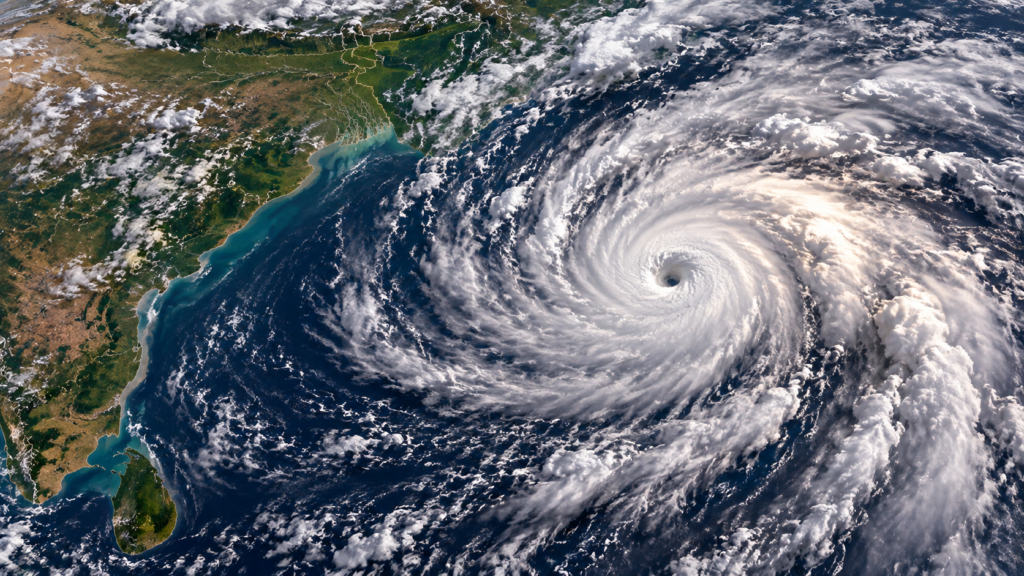
Featured image is a conceptual digital illustration of a Bay of Bengal cyclone, not an actual satellite image of Arnab.