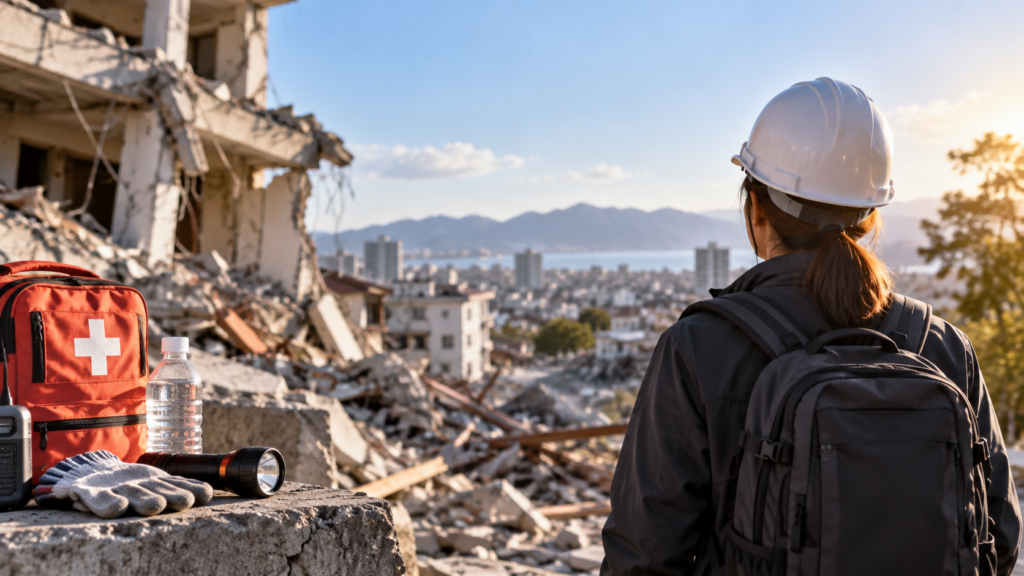

Living near a volcano does not mean an eruption is imminent, but it does make it important to understand local volcanic hazards and prepare before an emergency occurs.
A volcanic eruption can create very different situations: ashfall, evacuations, power outages, transportation disruptions, or temporary difficulties accessing water, food, and medication.
For that reason, a good volcano emergency kit is not simply a backpack filled with supplies.
Understanding the risks of volcanic ash and how to protect yourself can help you choose supplies suited to the hazards described by local authorities.
It should help you respond to two main situations:
evacuating quickly when authorities instruct you to leave, or sheltering safely at home when staying indoors is recommended.
CDC and USGS preparedness guidance emphasizes planning ahead, preparing emergency supplies, and knowing local evacuation procedures before volcanic activity escalates.
Before an emergency, you can check current volcano activity and official alerts on EarthSentra. Instructions from local emergency authorities should always take priority.
A Volcano Emergency Kit Needs More Than a Standard Emergency Kit
Many supplies are common to almost every emergency kit: water, food, medication, flashlights, and first-aid materials.
But volcanic emergencies introduce an additional problem:
volcanic ash.
Ash can irritate the respiratory system and eyes, enter homes and equipment, reduce visibility, and make transportation difficult.
That means a volcano emergency kit should also include supplies specifically intended to reduce exposure to ash, including appropriate respiratory and eye protection.
Drinking Water
Water is one of the highest priorities.
A volcanic emergency can temporarily disrupt basic services or make access to supplies difficult.
For household ashfall preparedness, USGS guidance recommends maintaining an emergency water supply. A commonly used preparedness reference is approximately one gallon — about 3.8 liters — per person per day for at least three days.
Actual requirements may be higher depending on climate, age, health, activity level, and the duration of the emergency.
Remember to include water for pets as well.
If local authorities recommend storing more, follow their guidance.
Food That Does Not Require Refrigeration
Your emergency supplies should contain non-perishable food that can be eaten even during a power outage.
Prioritize foods that are:
- easy to store;
- shelf-stable;
- simple to prepare;
- suitable for members of your household;
- not entirely dependent on refrigeration.
If you store canned food, include a manual can opener.
The objective is to remain reasonably self-sufficient if normal access to shops or services is temporarily disrupted.
Medications
Do not wait until an evacuation warning to think about essential medication.
CDC preparedness guidance recommends having at least a one-week supply of prescription medications available when preparing for a possible volcanic evacuation.
People with respiratory conditions should pay particular attention to their medication and treatment plans because volcanic ash can worsen some respiratory problems.
Never change medication or dosage without appropriate medical advice.
Respiratory Protection From Volcanic Ash
This is one of the most important differences between a general emergency kit and one designed for volcanic hazards.
A properly fitted NIOSH-approved N95 respirator can help reduce inhalation of airborne ash particles when exposure cannot be avoided.
Keep enough suitable respirators for the people in your household who can safely use them.
Fit matters. A respirator that does not seal properly may provide substantially less protection.
And remember:
an N95 does not replace an evacuation order.
If authorities instruct you to leave, evacuating safely takes priority.
For more detailed information about ash exposure, see our guide to volcanic ash risks and protection.
Eye Protection
Volcanic ash is abrasive and can irritate the eyes.
Include protective goggles suitable for environments containing airborne particles.
People who normally use contact lenses should also keep regular glasses available.
Ash trapped between a contact lens and the eye can cause considerable irritation, so contact lenses may be unsuitable during significant ash exposure.
Flashlight and Batteries
Volcanic activity can coincide with power outages.
Your emergency kit should include:
- a reliable flashlight;
- spare batteries;
- an additional light source when possible.
Do not depend exclusively on your phone’s flashlight.
Your phone may be important for communications, emergency information, maps, and alerts, so conserving its battery can be valuable.
Emergency Radio
A battery-powered or hand-crank radio can provide information when mobile networks or internet access become unavailable.
CDC includes a battery-powered radio among recommended emergency supplies for volcanic preparedness.
During a volcanic emergency, official information can change quickly.
Knowing that an evacuation zone has expanded or that authorities have changed an evacuation route may be as important as anything inside your backpack.
First-Aid Kit
Keep a first-aid kit accessible and periodically check its contents.
It should reflect the needs of your household.
Include appropriate basic first-aid supplies and replace expired or previously used items.
A first-aid kit is useful, but it should not be considered a substitute for professional medical assistance when serious injuries occur.
Sturdy Shoes and Appropriate Clothing
An emergency may require moving through areas affected by ash, debris, or other rough material.
Sturdy footwear should therefore be part of your preparations.
Clothing that covers the arms and legs can also help reduce skin exposure to ash.
Emergency clothing should be appropriate for the local climate and season.
Important Documents and Information
Not everything essential in an emergency is food or equipment.
Prepare secure physical or digital copies of important information such as:
- identification;
- emergency contacts;
- essential medical information;
- relevant insurance information;
- pet information;
- evacuation routes;
- family meeting points.
Avoid carrying unnecessary original documents when secure alternatives are available.
The objective is to maintain access to essential information if you need to leave home quickly.
Emergency Cash
ATMs and electronic payment systems may not work during power or communication outages.
Keeping a reasonable amount of emergency cash can therefore be useful.
Store it securely as part of your emergency preparations rather than carrying unnecessary amounts.
Phone and Backup Power
A mobile phone can help you receive alerts, consult maps, communicate with family, and follow official instructions.
Keep:
- a charging cable;
- a power bank;
- any necessary adapters or additional cables.
But prepare alternatives that do not depend entirely on your phone.
Mobile networks can become congested or unavailable during major emergencies.
Protecting Equipment From Ash
Fine volcanic ash can enter electronics, machinery, ventilation systems, and other equipment.
Useful supplies may include:
- sturdy plastic bags;
- protective covers;
- sealed containers;
- appropriate tape.
These can help reduce ash contamination of important equipment and supplies.
Hygiene Supplies
Include basic hygiene items your household may need for several days:
- toilet paper;
- personal hygiene products;
- menstrual products when needed;
- sturdy waste bags;
- supplies for babies or dependent family members.
An emergency kit should reflect the people who will actually use it.
There is no truly universal kit.
Don’t Forget Your Pets
Pets need an emergency plan too.
Prepare:
- drinking water;
- food;
- medications;
- a carrier or leash;
- identification;
- basic hygiene supplies.
Plan in advance where your animals could stay if evacuation becomes necessary.
Some emergency shelters may not accept pets, so finding alternatives during an actual evacuation may be too late.
Prepare Your Vehicle Too
If you live somewhere where volcanic evacuation is possible, keeping a small emergency supply kit in your vehicle can be useful.
Possible supplies include:
- water and food;
- maps;
- flashlight;
- batteries;
- first-aid materials;
- basic tools;
- charging equipment.
However, volcanic emergencies involve an important complication:
volcanic ash can damage vehicles.
Heavy ashfall can reduce visibility, make roads slippery, clog filters, and affect mechanical components.
Having a prepared vehicle does not mean you should drive during every volcanic event.
Evacuate when authorities instruct you to do so and follow designated routes.
Evacuation Bag vs. Home Emergency Supplies
Not everything needs to fit inside one backpack.
A more practical approach is to prepare two levels of emergency supplies.
Evacuation Bag
Keep essential items that allow you to leave quickly:
- drinking water;
- basic food;
- medications;
- N95 respirators;
- protective goggles;
- flashlight;
- essential documents;
- phone charger and power bank;
- basic first-aid supplies;
- indispensable personal items.
The bag should remain manageable enough to carry.
Supplies for Sheltering at Home
At home, you can maintain larger quantities of:
- water;
- food;
- medication;
- respiratory protection;
- hygiene products;
- batteries;
- pet supplies;
- materials for protecting your home from ash.
Preparing for both possibilities matters because volcanic emergencies do not always require evacuation.
Depending on the hazard and your location, authorities may instead recommend remaining indoors.
72 Hours, One Week, or Two Weeks?
There is no single number appropriate for every volcanic emergency.
Different recommendations address different needs.
For basic emergency preparedness, maintaining supplies for at least several days provides an important starting point.
For prescription medication, CDC volcanic preparedness guidance recommends having at least a one-week supply available when preparing for evacuation.
USGS volcano preparedness guidance also encourages households in volcanic areas to consider the possibility of being self-sufficient for up to two weeks, depending on circumstances.
These recommendations are not necessarily contradictory.
They describe different components and levels of preparedness.
A sensible approach is to establish a basic emergency supply first and then expand it according to the hazards and official recommendations for your area.
Know Your Evacuation Route Before You Need It
A perfectly prepared backpack has limited value if you do not know where to go.
Before an emergency:
understand local hazard zones, identify official evacuation routes, and establish a meeting point for your household.
Consider what would happen if family members were separated when an eruption or evacuation occurred.
It can also be useful to designate a contact person outside the potentially affected area.
Planning these details during normal conditions is much easier than trying to solve them during an emergency.
Review Your Emergency Kit Regularly
Preparing a kit once and forgetting about it for five years is not enough.
Periodically check:
- expiration dates;
- drinking water;
- food;
- medications;
- batteries;
- condition of respirators;
- clothing;
- children’s needs;
- needs of older family members;
- pet supplies;
- important documents;
- power banks.
Household needs change over time.
Your emergency preparations should change with them.
Volcanic Hazards Are Not Limited to Lava
Another reason to prepare a plan rather than just a backpack is that volcanoes can produce several different hazards.
Depending on the volcano, these may include:
ashfall, lahars, pyroclastic flows, volcanic gases, ballistic projectiles, and lava flows.
The appropriate response can differ dramatically depending on the hazard.
Authorities may order evacuation because of lahars, pyroclastic flows, or heavy ashfall, while in other situations they may recommend sheltering indoors because of ash.
Never make an emergency decision based only on what the volcano looks like from your home.
Check Volcano Status and Follow Official Instructions
EarthSentra allows you to check current volcano activity and official alerts, bringing together information from scientific monitoring agencies and volcano authorities.
However, there is an important difference between:
volcanic information and an emergency instruction.
EarthSentra helps you understand and follow volcanic activity.
Responsible local and national authorities determine evacuations, exclusion zones, road closures, shelter instructions, and other emergency measures.
During an emergency, those instructions always take priority.
Frequently Asked Questions
What should a volcano emergency kit contain?
At minimum, consider water, non-perishable food, medication, first-aid supplies, a flashlight, batteries, emergency communications, respiratory protection, protective goggles, sturdy footwear, and supplies appropriate for the people and pets in your household.
Do I need a special mask for volcanic ash?
A properly fitted NIOSH-approved N95 respirator can help reduce inhalation of airborne ash particles. Respiratory protection does not replace an evacuation order.
How much water should I store?
A common emergency-preparedness starting point is approximately one gallon — around 3.8 liters — per person per day for at least three days. Local authorities may recommend larger supplies depending on regional conditions.
How many days should my emergency supplies last?
It depends on the situation. Several days of essential supplies are a useful minimum starting point, while USGS volcano preparedness guidance encourages considering the possibility of being self-sufficient for as long as two weeks.
Should I evacuate as soon as a volcano erupts?
Not necessarily. The correct response depends on your location and the specific hazard. Authorities may order evacuation in some areas while advising people elsewhere to shelter indoors.
Follow official instructions rather than making the decision solely from the fact that an eruption has occurred.
Should I prepare supplies for my pets?
Yes. Include food, water, medication, identification, and appropriate equipment for transporting them. Determine in advance where pets can stay if evacuation becomes necessary.
Sources
Centers for Disease Control and Prevention (CDC) — volcanic eruption preparedness, evacuation, emergency supplies, medication, and ash protection.
U.S. Geological Survey (USGS) / Volcano Hazards Program — volcano preparedness, family planning, emergency kits, ashfall, evacuation, and volcanic hazards.
International Volcanic Health Hazard Network (IVHHN) — public preparedness and health guidance concerning volcanic ash.